Previously, we shared the entry requirements and course structures of several medical schools in the UK and Australia. For many students and parents, Medicine is considered a "top-tier dream subject." Apart from achieving outstanding academic results, applicants also have to face immense pressure from entrance exams and interviews.
But have you ever wondered if every subject or profession has its own fascinating trivia that we have never imagined? Starting today, we will scout and gather interesting trivia from various disciplines for you. Let's see if there is any knowledge you already knew but might have overlooked!
Here are 6 pieces of top-tier trivia from traditional Medicine. Each story directly corresponds to the core learning areas that medical students must master in their 5-year or 6-year curriculum:

Source: Shutterstock
1. Surgery
【Why are surgical gowns green instead of white? A life-and-death battle against "afterimages"】
The Fun Fact: Before the early 20th century, doctors' surgical gowns were actually all white. However, when surgeons stared at bright red blood for a long time and then suddenly looked up at a white wall or a colleague's white gown, the brain's visual cortex would create a physiological illusion, causing a blue-green "ghostly afterimage" to appear before their eyes. This would lead to severe visual fatigue or even cause doctors to misidentify nerves or blood vessels during delicate operations. Later, the medical community discovered that green and blue are the "complementary colors" of red, which can perfectly neutralize and eliminate this afterimage. Since then, operating rooms have turned into a "sea of green."
Corresponding Learning Areas: * Principles of Surgery: Learning aseptic techniques, environmental psychology, and safety protocols in the operating room.
- Ophthalmology & Visual Physiology: Studying how the photoreceptor cells (cones and rods) of the human retina process color and manage visual fatigue.
2. Gastroenterology & Infectious Diseases
【Feces as medicine? The medical world's most powerful "Golden Transfer Technique"】
The Fun Fact: It sounds like a heavy topic, but it's absolutely true! When a patient is infected with the life-threatening bacterium Clostridioides difficile (C. diff), even the strongest modern antibiotics are often powerless. At this point, doctors will utilize a therapy called "Fecal Microbiota Transplantation" (FMT)—where feces from a healthy donor is filtered, diluted, and then infused into the patient's intestinal tract via an endoscopy. As absurd as this method sounds, the clinical cure rate is surprisingly over 90%, far outperforming conventional medications.
Corresponding Learning Areas: * Microbiology & Immunology: Studying the human immune system and the defense mechanisms of the gut microbiome.
- Gastroenterology: Learning the pathophysiology of digestive system diseases and innovative biological therapies.
3. Cardiology
【"Heartbreak" is not just a metaphor; it is a genuinely fatal acute heart condition】
The Fun Fact: When facing the death of a loved one, a severe breakup, or extreme fear, a person can truly die of a "broken heart." In medicine, this is known as "Takotsubo Cardiomyopathy" (Broken Heart Syndrome). When the human body experiences extreme emotions, the brain secretes a massive surge of stress hormones (such as adrenaline). This causes the bottom of the heart's left ventricle to suddenly weaken and abnormally balloon out, taking a shape that resembles a "takotsubo" (an octopus pot used by Japanese fishermen). This triggers symptoms similar to a myocardial infarction (heart attack), and in severe cases, it can lead to sudden cardiac arrest.
Corresponding Learning Areas: * Cardiovascular Pathology: Learning about cardiac structure, electrocardiogram (ECG) analysis, and biochemical markers of myocardial injury.
- Psychosomatic Medicine: Exploring the cross-disciplinary interactions among the nervous system, endocrine system, and cardiovascular system.
4. Neurology & Psychiatry
【The hand has been amputated, so why does it still feel like "the fingers are in pain"? The brain's deception game】
The Fun Fact: Many unfortunate patients who undergo amputation still intensely feel that the "non-existent limb" is aching, itching, or twisting months or even years after the surgery. This is known in medicine as "Phantom Limb Pain." This happens because the "brain map" (somatosensory cortex) in the cerebral cortex still retains the vivid memory of that hand. When that specific area loses its original nerve signal inputs, it generates erroneous pain signals on its own. Doctors nowadays even use a visual illusion called "mirror therapy" to trick the brain, thereby successfully alleviating this agony.
Corresponding Learning Areas: * Neuroanatomy: Learning the functional zoning of the cerebral cortex (such as the somatosensory cortex) and nerve conduction pathways.
- Psychiatry and Clinical Psychology: Studying the psychological mechanisms of chronic pain and the rehabilitation applications of neuroplasticity.
5. Evidence-Based Medicine & Clinical Research
【Does a "fake surgery" work just as well as a "real surgery"? The medical world's most powerful placebo effect】
The Fun Fact: Everyone has heard of the placebo effect (taking a flour pill believing it's a miracle drug and subsequently recovering), but did you know that even surgeries can have placebos? In clinical medical trials, there is a procedure known as "Sham Surgery" (simulated surgery). For example, when testing a new arthroscopic knee surgery, patients in the control group will be put under general anesthesia, wheeled into the operating room, have their skin incised, and doctors will even intentionally make drilling sounds—but in reality, they sew it back up without doing anything. Incredibly, many patients who underwent sham surgery experienced a reduction in joint pain to the exact same degree as those who had the actual surgery!
Corresponding Learning Areas: * Evidence-Based Medicine (EBM): Learning how to design rigorous double-blind clinical trials to validate therapeutic efficacy.
- Medical Ethics: Exploring under what extreme and compliant circumstances simulated surgeries can be performed on patients with informed consent.
6. Gross Anatomy
【The Silent Mentor's final surprise: Living a full life, only to discover their heart was on the right side?】
The Fun Fact: In the first year of medical school, the most important milestone for medical students is entering the anatomy lab to face their "first patient"—the Silent Mentor (cadaver). During the dissection process, medical students often discover secrets not written in textbooks. For instance, some individuals live to be 80 years old, and it is only after their passing, when dissected by medical students, that they are found to have "Situs Inversus"—a condition where the heart and stomach are on the right, while the liver and spleen are on the left, with all internal organs completely reversed like a mirror image. Because they were perfectly healthy during their lifetime, neither they nor their doctors ever knew.
Corresponding Learning Areas: * Gross Anatomy: A mandatory rite of passage for medical students involving months of hands-on dissection to master the precise locations of human muscles, blood vessels, nerves, and organs.
- Embryology & Developmental Biology: Studying during which week of maternal development and which genetic mutations cause errors in the rotation and positioning of organs.
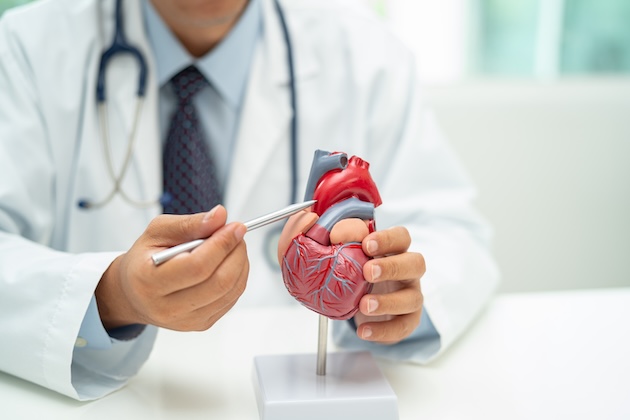
Source: Shutterstock
We hope the above trivia deepens your interest in Medicine! Apart from Hong Kong, medical schools in the UK and Australia are also highly popular among international students. Moreover, their entry requirements are not as dauntingly high as those in Hong Kong. Students can even give themselves another opportunity to regain confidence in pursuing medicine through dedicated medical foundation or pathway programs.
The professional team at Synchro Overseas Education is ready to tailor a bespoke UK and Australian medical study plan just for you. Whether it is UCAT exam planning, MMI interview coaching, or university selection strategies for medical pathway programmes, we offer the most forward-thinking professional advice and global perspectives to help your children confidently achieve their dreams of becoming internationally renowned doctors. For more information or to book a consultation, please contact Synchro Overseas Education by calling 2111 1480 or via WhatsApp 5117 4380.