Following our previous look behind the veil of traditional medicine, today we shift our focus to another precise, highly rewarding, and equally sought-after "dream subject"—Dentistry.
In many people's imagination, isn't a dentist's job just patching up and repairing some thirty-odd teeth every day? Some parents even feel that the scope of study in dentistry is narrower than that of medicine. If you think this way, you are vastly underestimating this profession, which fuses biology, micro-sculpting engineering, and aesthetics! Today, we share 6 dentistry fun facts that even many adults don't know, to see what advanced knowledge dental students are actually studying every day behind these facts!
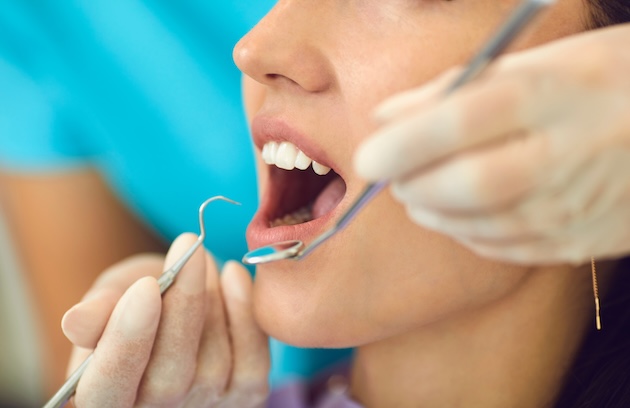
Soure: Shutterstock
1. Dental Anatomy & Biomaterials
【The Human Body's Strongest "Shield": Crystals as Hard as Steel Hidden in Your Mouth!】
The Fun Fact: What is the hardest bone in the human body? The answer is: it's not a bone at all! The outermost layer of human teeth, the enamel, is the hardest tissue in the entire human body. Its hardness reaches up to 5 on the Mohs hardness scale, making it harder than gold and iron, and even close to quartz! This is primarily because it is composed of high-density hydroxyapatite crystals, designed to withstand millions of instances of intense chewing over a person's lifetime.
Corresponding Learning Areas: Dental Anatomy: In-depth study of the three-layered structure of teeth (enamel, dentin, dental pulp) and their microscopic physical properties.
- Dental Materials:Modern dentists must work like engineers to seek out and research dental filling materials (such as ceramics and composite resins) that can rival the hardness of enamel while adapting to the pH levels of the oral cavity.
2. Forensic Odontology
【Teeth as the Human Body's "Black Box": Serial Killers Convicted and Titanic Victims Identified Because of It】
The Fun Fact: No two people in the world have identical teeth. Even identical twins have unique characteristics in the shape, alignment, and even the filling positions of their teeth. Therefore, teeth act like a "toothprint," a form of identification that is even harder to destroy than fingerprints. Throughout history, in many major aviation disasters (including the Titanic) or with highly decomposed remains, forensic investigators relied on comparing the dental records of the deceased from when they were alive to confirm identities. Even for the famous American serial killer Ted Bundy, the key piece of evidence that ultimately led to his conviction was the "bite mark" he left on a victim.
Corresponding Learning Areas: Forensic Odontology: Learning how to assist in criminal investigations and identity verification through bite mark analysis, age estimation, and dental DNA extraction.
- Oral Radiology:Mastering the interpretation of various oral X-rays and 3D Cone Beam Computed Tomography (CBCT) imaging.
3. Maxillofacial Anatomy
【Toothaches Aren't Common Illnesses, Yet the Pain Can Make You Think You Have Tinnitus and Migraines?】
The Fun Fact: Many people have experienced this: even though it's clearly a single molar in the lower left corner that is inflamed, when it hurts, you feel a throbbing pain in your temple, and your ears and throat hurt along with it, making it impossible to tell exactly where the pain is originating from. In medicine, this is called "referred pain." Because the sensations of the oral cavity, face, and scalp are controlled by the same massive trigeminal nerve, when the dental pulp nerve sends out strong pain signals, the brain—acting as the "central processing unit"—gets confused, mistakenly thinking that the entire half of the face is suffering.
Corresponding Learning Areas: Neuroanatomy: Precisely deconstructing the pathways of the twelve pairs of cranial nerves in the head (specifically the fifth pair, the trigeminal nerve, and the seventh pair, the facial nerve).
- Endodontics:Commonly known as a "root canal treatment," where dentists must precisely clear inflamed nerves and blood vessels within microscopic root canals with diameters of less than 1 millimeter.
4. Oral Biology
【The Saliva You Secrete in a Lifetime Can Actually Fill Two Standard Swimming Pools?】
The Fun Fact: It might sound a bit gross, but a healthy person secretes about 1 to 1.5 liters of saliva (spit) every day, accumulating to as much as 24,000 liters over a lifetime—enough to fill two standard swimming pools! Don't underestimate saliva; it isn't just water, it is the "natural body armor" of your teeth. Saliva contains large amounts of calcium and phosphate. When you consume acidic foods and cause slight erosion to the surface of your teeth, saliva automatically helps the teeth undergo "remineralization," replenishing the lost minerals. Without saliva, human teeth would be completely dissolved by the acidity in food within just a few years.
Corresponding Learning Areas: Oral Biochemistry: Studying the composition of saliva, pH buffering mechanisms, and the microbiome comprising hundreds of bacterial species in the oral cavity.
- Cariology:Scientifically deconstructing the mechanism of tooth decay formation and researching how to prevent dental demineralization through chemical means (such as fluoride).
5. Oral & Maxillofacial Surgery
【Wisdom Teeth Don't Make You Smarter; They Are "Historical Relics" Left by Our Ancestors】
The Fun Fact: Why do wisdom teeth cause pain and impaction for most people, requiring a dentist to extract them? This is actually an evolutionary tragedy. Tens of thousands of years ago, our ancestors needed to tear and chew raw meat, nuts, and roots, so their jaws (maxillofacial bones) were very broad, providing ample room for the third molars (wisdom teeth). However, since humans learned to use fire and food became increasingly refined, we no longer required such powerful chewing strength. The human jaw evolved to become smaller and narrower—yet our genes forgot to delete wisdom teeth. Consequently, when these four teeth grow out, there is no space for them, forcing them to grow horizontally or at an angle, damaging the healthy teeth in front of them.
Corresponding Learning Areas: Oral & Maxillofacial Surgery: Learning high-difficulty outpatient surgeries, including impacted tooth extractions, jaw cyst surgeries, and even cooperating with plastic surgery to perform "orthognathic surgery" to correct underbites.
- Orthodontics:Using mechanical principles to guide tooth movement via braces, reshaping bone structures and facial aesthetics.
6. Periodontics & Systemic Health
【Not Brushing Your Teeth Can Burst Blood Vessels? Oral Bacteria Can Ride a "Blood Rollercoaster" to the Heart】
The Fun Fact: Dentists frequently remind you to use dental floss, not just to prevent bad breath, but to save your life. When you suffer from severe periodontal disease and your gums are chronically inflamed and bleeding, periodontal pockets become an "unobstructed pathway." Deadly bacteria within the oral cavity can directly burrow into microscopic blood vessels, traveling throughout the body via the bloodstream. Medical research confirms that these oral bacteria can settle on heart valves, triggering fatal endocarditis, and can even accelerate atherosclerosis, increasing the risk of strokes and heart attacks!
Corresponding Learning Areas: Periodontics: Studying the diseases and treatments of the supporting tissues around the teeth (gums, periodontal ligaments, alveolar bone).
- Oral-Systemic Health: Exploring the interdisciplinary medical connections between oral health and diabetes, cardiovascular diseases, and even premature birth in pregnant women.

Source: Shutterstock
A Dental World Broader Than You Think
After reading this trivia, you will realize that being a dentist is definitely not as simple as just treating a "toothache." They must understand the neurology and bacteriology of internal medicine, master the scalpel techniques of surgery, and possess the aesthetic vision of a sculptor.
For Hong Kong students, local dental slots are extremely scarce, and the competition is white-hot. However, dental schools in Australia and the United Kingdom possess world-class clinical equipment and internship opportunities, and their professional qualifications are widely recognized. If students are interested in this discipline that "combines science and art," they might as well give themselves an opportunity to look abroad and map out a pathway to practicing medicine with higher chances of success and clearer prospects!
The professional team at Synchro Overseas Education is ready to tailor a bespoke UK and Australian dental study plan just for you. Whether it is UCAT / UCAT ANZ exam planning, preparation for dental-specific manual dexterity and spatial awareness tests, MMI interview coaching, or university selection strategies for dental pathway programmes, we offer the most forward-thinking professional advice and global perspectives to help your children confidently achieve their dreams of becoming internationally renowned dentists. For more information or to book a consultation, please contact Synchro Overseas Education by calling 2111 1480 or via WhatsApp 5117 4380.