Today, we shift our focus to a premier discipline that has become incredibly popular in the sports and health industries in recent years, yet is frequently confused by students with Physical Therapy (PT): Exercise and Sports Science (ESS).
Many students see the words "Sports Science" and immediately think: "Doesn't that just mean teaching people how to work out or becoming a PE teacher?" or assume that this major is "only for athletes." If that's what you think, you are completely missing out on a scientific profession that pushes human potential to its absolute limits!
Source: Shutterstock
Today, we are sharing 4 exercise science fun facts that even veteran fitness coaches might not know, revealing just how hardcore this profession truly is!
1. Is a Slow Heart Rate an Illness? Elite Athletes Have a Resting Heart Rate of 40 BPM—Even Doctors Might Get Worried!
The Fun Fact: In a resting state, a normal human heart rate ranges from 60 to 100 beats per minute (BPM). If an average person's heart rate drops to the 40s, it is medically referred to as "bradycardia," which might require a doctor's visit or even a pacemaker. However, if you measure the heart rate of a marathon record holder, you will find that their resting heart rate can be as low as 30 to 40 BPM! In exercise science, this is known as "Athlete's Heart." Exercise scientists have found that after prolonged, high-intensity endurance training, an athlete's myocardium becomes exceptionally developed, and their ventricular volume expands. The volume of blood pumped per beat (Stroke Volume) is several times that of an average person. Therefore, their heart "beats once but does the work of three beats," operating with extreme efficiency—the ultimate manifestation of human evolution!
PT vs ESS: The Big Difference in Their Roles
- Physical Therapists (PT): If a patient suffers from heart or cardiovascular diseases, PTs conduct "cardiopulmonary rehabilitation." The goal is to help the patient safely restore normal life functions, moving from a negative score back to zero.
- Exercise Scientists (ESS): Working with healthy individuals or athletes, ESS professionals use scientific monitoring (such as testing maximum oxygen uptake, or VO2 Max) to precisely design cardiopulmonary training protocols, pushing a healthy person's fitness from zero to hundred.
2. Training with Hollywood Tech Used in "Avatar"? Exercise Scientists Are "Human Data Masters"
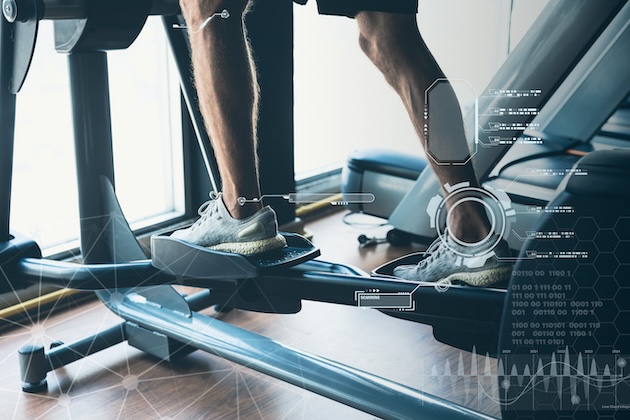
The Fun Fact: Many people think an exercise scientist's job is simply holding a stopwatch and shouting on a sports field. In reality, a modern exercise scientist works in a "high-tech studio" packed with sensors! To optimize the movements of javelin throwers, high jumpers, or golfers, ESS professionals utilize 3D Motion Capture systems—the exact same Hollywood technology used to film Avatar or Marvel movies. They place glowing sensors all over the athlete's body and use over a dozen high-speed cameras to capture the movement of bones and joints in real time. Through this physical and biomechanical data, an ESS can pinpoint a microscopic error like a "1-degree deviation in a pitcher's release angle" or identify a hidden injury risk such as "excessive stress on the knee joint during a sprint start."
PT vs ESS: The Big Difference in Their Roles
- Physical Therapists (PT): When an athlete unfortunately suffers a joint injury or a torn ligament due to a movement error, a PT steps in to help eliminate inflammation, relieve pain, and conduct rehab using manual therapy, electrotherapy, and acupuncture.
- Exercise Scientists (ESS): Long before an athlete gets injured, an ESS uses biomechanical data to prevent injuries and optimize movement efficiency, helping athletes "shoot more accurately and run faster" on the field.
3. Muscle Soreness After Exercise Is Due to "Lactic Acid Buildup"? You've Misunderstood It for Decades!
The Fun Fact: Many people finish a heavy weight-training session or a trail run and find their legs so sore the next day that they can barely walk down the stairs, complaining, "Ugh, it's that lactic acid buildup again!" Exercise scientists actually "cleared lactic acid's name" decades ago! Scientific research has proven that the lactic acid produced during exercise is completely cleared or converted by the body within about an hour after working out. The severe soreness you feel the next day or even two days later is academically termed Delayed Onset Muscle Soreness (DOMS). It is caused by countless microscopic, "benign tears" and mild inflammation in the muscle fibers during eccentric contraction training. An ESS utilizes this micro-trauma mechanism to precisely calculate training volume, triggering the body's "supercompensation" process so that the muscles repair themselves to become stronger than before!
PT vs ESS: The Big Difference in Their Roles
- Physical Therapists (PT): PTs deal with "pathological" muscle tears (such as severe strains or ruptures) that require medical intervention and rest.
- Exercise Scientists (ESS): ESS professionals create "physiological" micro-traumas. By tailoring a precise "Exercise Prescription" (calculating sets, weight, and rest intervals), they scientifically stimulate muscle growth.
4. Top Athletes Suddenly "Forget How to Play"? Psychological Twists Can Destroy Physiology!
The Fun Fact: There is a terrifying phenomenon in the sports world known as "The Yips." Many peak, elite athletes—such as an NBA star suddenly losing the ability to shoot free throws, a professional golfer's hands shaking so much they can't putt, or a gymnast suddenly forgetting where they are mid-air—experience it. Their bodies are completely uninjured, yet their brains suddenly act as if they've caught a computer virus, failing to execute automated motor skills.
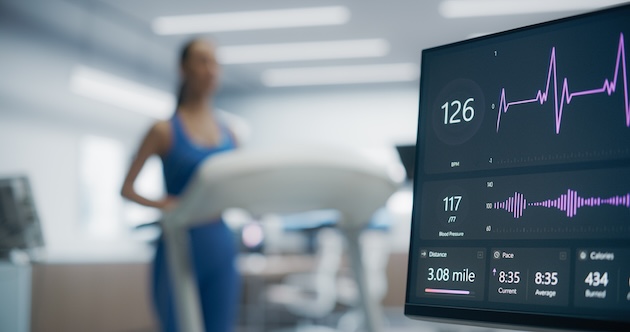
Sport psychology and neurological control within exercise science are the high-tech solutions dedicated to conquering these "brain crashes." An ESS monitors an athlete's brainwaves (EEG) and Heart Rate Variability (HRV), using biofeedback techniques to train the athlete's brain to stay calm under extreme pressure, helping them rebuild the neural pathways between the brain and muscles.
PT vs ESS: The Big Difference in Their Roles
- Physical Therapists (PT): PTs focus on repairing the "hardware" of nerves and muscles (such as neurological pathway damage after a stroke).
- Exercise Scientists (ESS): ESS professionals focus on optimizing the "software" of psychological and cerebral control, mastering the mind's impact on physical performance.
Source: Shutterstock
Study Abroad Hotspot: Curtin University's "Four Pillars of Exercise Science" Core Curriculum
After exploring these fun facts, is it clear that Exercise and Sports Science (ESS) is a highly data-driven and hardcore profession rooted in human physiology? In short: "See a PT when injured; find an ESS to get stronger!"
If you possess a deep passion for sports, fitness, and pushing human limits, Curtin University in Australia provides an ideal educational pathway. Its Bachelor of Science (Exercise and Sport Science) is a 3-year full-time undergraduate degree featuring a comprehensive curriculum:
- World-Class Professional Accreditation: The program is fully accredited by Exercise and Sports Science Australia (ESSA). Graduates are eligible to directly register as an Accredited Exercise Scientist (AES), a professional qualification that is highly recognized both in Australia and upon returning to Hong Kong.
- Mastering the Four Pillars of Exercise Science: The curriculum progresses systematically. In the first year, students take interprofessional foundational courses alongside other health science disciplines. In the second and third years, they dive deep into the core domains mentioned in our fun facts: Biomechanics, Physiology, Psychology & Behaviour Change, and Motor Control and Learning.
- Real Industry Internship: To satisfy ESSA accreditation standards, students are placed in an industry environment for at least 140 hours during their final year! Students step into real sports associations, professional teams, community health promotion organizations, or exercise science research institutes. Under mentor guidance, they directly perform physical assessments, design protocols, and guide exercise prescriptions for real clients, gaining practical experience for immediate employment upon graduation.
- Seamless Bridge to a Clinical Medical Pathway: For those wishing to go further after graduation, this degree serves as the perfect stepping stone, bridging seamlessly into Curtin University’s 1.5-year Master of Clinical Exercise Physiology. This allows you to become a "Clinical Exercise Physiologist" recognized by Australia’s Medicare, specializing in using scientific exercise programs to treat and manage chronic conditions (such as diabetes, heart disease, and cancer recovery).
Data-Driven Human Potential: Master Your UK & Australian Sports Science Journey with Synchro Overseas Education
For students who are passionate about sports, enjoy working with data, and wish to transform their interests into a professional medical and sporting career, this discipline is undoubtedly a smart choice to break free from traditional boundaries and align with global health trends!
The professional team at Synchro Overseas Education is ready to tailor a bespoke UK and Australian Exercise and Sports Science (ESS) study plan just for you. Whether it is entry planning for top-tier institutions like Curtin University with Exercise and Sports Science Australia (ESSA) accredited programmes, academic profiling for essential biomechanics and human physiology prerequisites, advice on securing the 140-hour industry placement, or long-term career mapping towards a Master of Clinical Exercise Physiology, we offer the most forward-thinking professional advice and global perspectives. We are here to help your children confidently achieve their dreams of becoming Accredited Exercise Scientists. For more information or to book a consultation, please contact Synchro Overseas Education by calling 2111 1480 or via WhatsApp 5117 4380.