Today, we turn our spotlight to another elite medical discipline that almost everyone has encountered in a hospital, yet whose roles and functions are frequently confused—Radiography.
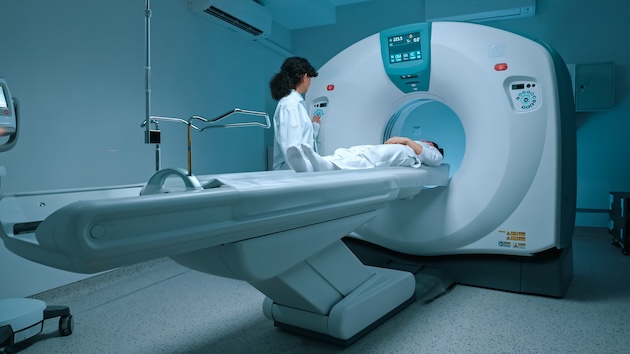
When people visit a hospital, whether it is for an X-ray after a nasty fall, a Computed Tomography (CT) scan for a health check, or undergoing "electrical therapy" (radiation therapy) to battle cancer, they always see a team of uniformed professionals operating massive, high-precision machinery. What many do not realize, however, is that these professionals are strictly divided into two entirely distinct career and academic specialties: Diagnostic Radiographers and Radiation Therapists.
Source: Shutterstock
Here are 6 fascinating radiography facts that even adults often mix up, followed by a detailed breakdown of the major differences in their studies and daily work!
1. Radiological Physics & Imaging
【The World's First X-ray Image Scared the Subject Into Thinking She Saw a Ghost!】
The Fun Trivia: In 1895, German physicist Wilhelm Röntgen accidentally discovered X-rays. To test this miraculous ray, he conducted the world's first clinical experiment on his wife, capturing an image of the bones in her left hand and the wedding ring on her ring finger. When Frau Röntgen saw the stark white bones in the photograph, she turned pale with fright and gasped, "I have seen my death!" This eerie photograph marked the very first step in modern medical imaging.
Corresponding Fields of Study:
- Radiological Physics: Learning the principles behind generating various types of ionizing radiation and how these rays interact with human matter.
- Anatomical Imaging: Learning how to use radiation to seamlessly transform the three-dimensional structure of the human body into flawless 2D or 3D medical images.
2. Tumor Radiobiology
【"Electrical Therapy" Contains No Actual Electricity—It’s a Precision Snipe at Cellular DNA!】
The Fun Trivia: In Chinese, radiation therapy is colloquially called "electrical therapy" . Because of this, many elderly patients associate it with electric chairs, imagining currents surging through their bodies or causing them to twitch. In reality, there is absolutely zero electricity involved! The principle relies on high-energy ionizing radiation (such as high-energy X-rays, gamma rays, or proton beams) acting like invisible mini-missiles to precisely break the DNA double-helix structure inside cancer cells. Once their genetic code is destroyed, the cancer cells lose the ability to divide and ultimately undergo self-destruction.
Corresponding Fields of Study:
- Radiobiology: Studying the biological effects of radiation on molecular, cellular, and tissue levels.
- Clinical Oncology:Gaining a deep understanding of the causes, staging, and clinical applications of radiation therapy for various cancers.
3. Medical Imaging Technology
【Confused by Ultrasound, CT, and MRI? Their Core Principles Are Universally Different!】
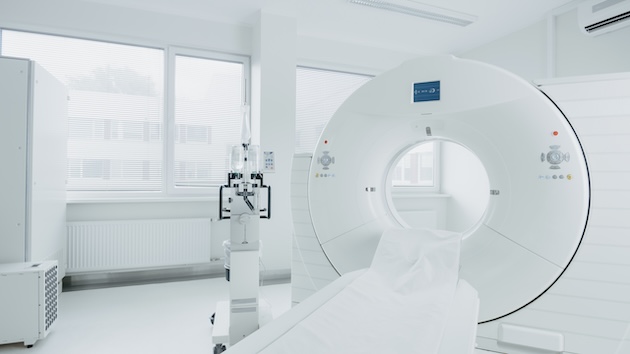
The Fun Trivia:Walking into a hospital's radiology department, you will see all sorts of machines resembling "giant tunnels" or "massive fans." Many assume they work similarly, but their underlying technologies are completely different! A CT scan uses high-dose X-rays that rotate around the human body to capture layered 3D images, much like "slicing a loaf of bread." Meanwhile, Magnetic Resonance Imaging (MRI)features "zero radiation"; it utilizes a powerful magnetic field to vibrate water molecules in the body and reassemble the radio signals. Radiographers must be cross-disciplinary tech experts, fluent in operating multiple supercomputer instruments based on entirely different scientific principles.
Corresponding Fields of Study:
- Imaging Instrumentation: Comprehensively deconstructing and learning to operate X-ray machines, CT scanners, MRI systems, ultrasound equipment, and nuclear medicine instruments.
4. Radiation Therapy Planning
【Crafting a "3D Mask" Before Radiation Therapy? It’s Not for Fun—It’s to Save a Life!】
The Fun Trivia:Before patients with nasopharyngeal cancer or brain tumors undergo radiation therapy, therapists use a special thermoplastic material to mold a custom "3D mask" that fits snugly over their face. During treatment, this mask is securely locked onto the treatment bed. This is necessary because modern radiation therapy achieves millimeter-level precision. If a patient moves their head by just a few millimeters due to breathing or swallowing, the high-energy radiation beams will miss their target—failing to destroy the tumor at best, or severely damaging adjacent, fragile structures like the optic nerve or brainstem at worst!
Corresponding Fields of Study:
- Treatment Planning: Learning to utilize high-end computer software and systems to calculate the most precise radiation angles and dosages.
- Immobilization Technology & Mould Production: Learning to immobilize the patient’s body through precise technological means, ensuring the treatment positioning is flawless every single session.
5. Radiation Protection & Dosimetry
【Working in a Radiation Environment Daily, Yet a Radiographer’s Radiation Intake Is Lower Than an Airline Pilot's?】
The Fun Trivia:Parents often worry: "Working in the radiology department every day must mean absorbing a ton of radiation, right? Isn't that dangerous?" Actually, every radiographer wears a small badge called a TLD Badge (Thermoluminescent Dosimeter) at work, which is regularly sent out for monitoring. Because the walls of hospital radiation rooms are embedded with thick lead plates or heavy-density concrete, coupled with strict protection protocols, the actual environmental radiation a radiographer receives annually is lower than that of commercial airline captains or flight attendants, who are constantly exposed to cosmic radiation at high altitudes!
Corresponding Fields of Study:
- Radiation Protection: Learning national and international safety standards, and researching methods to minimize radiation exposure for both patients and healthcare personnel.
- Radiation Dosimetry: Accurately calculating and measuring the deposition of radiation doses within human tissues.
6. Clinical Patient Care & Psychology
【One Professional Path Grows "Horizontally" While the Other Goes "Vertically"—Your Personality Dictates Which Fits You Best!】
The Fun Trivia: These two professions demand vastly different personality traits. Diagnostic Radiographers encounter hundreds of different patients daily (ranging from taking chest X-rays for newborns to performing emergency CT scans for traffic accident victims). The role demands efficiency, decisiveness, and incredible adaptability. Conversely, Radiation Therapists accompany the exact same cancer patient through a radiation course lasting weeks or even months. Meeting every single day fosters a deep, friend-like bond between healthcare provider and patient, making empathy and patience paramount.
Corresponding Fields of Study:
- Patient Care & Communication in Radiology: Learning how to guide and comfort patients of different ages and medical conditions to cooperate during examinations.
- Psycho-oncology: Learning how to support and ease the fear and anxiety experienced by cancer patients and their families facing treatment.
Core Analysis: What Are the Differences in Studies and Daily Work?
By referencing professional medical insights and direct sharing from public hospital radiation therapists, we have compiled a detailed comparison of these two seemingly twin, yet inherently different professions:
| Comparative Feature | Diagnostic Radiographer | Radiation Therapist |
| Core Mission | Identify the root cause (Diagnosis).Peer inside the human body using imaging equipment to provide diagnostic evidence for doctors. | Eradicate the tumor (Treatment).Utilize high-energy radiation to precisely kill cancer cells. |
| Professional Traits | "Horizontal Growth."Broad scope of work. Must master X-rays, CT, MRI, Ultrasound, etc., dealing with illnesses across all parts of the human body. | "Vertical Growth."Deep focus on oncology. Handles the entire rigorous process of radiation therapy "from scanning and planning to treatment delivery." |
| Working Hours | Requires 24-hour shift duties.Emergency rooms and operating theatres require immediate X-rays or CT scans for sudden car accidents or deteriorating patients. | Primarily office hours (e.g., 9 AM to 6 PM).Relatively fixed schedules. Cancer radiation therapies are appointment-based, with rare instances requiring late-night emergency sessions. |
| Patient Dynamics | Interacts with a highly diverse pool of patients, but typically "only once."Patients leave after their scan, requiring fast, effective communication rather than long-term relationships. | Sees the same cancer patient dailyuntil the entire treatment course concludes. Monitors side effects directly and easily builds strong, long-term bonds. |
| Salary & Benefits | Identical.Within the Hong Kong Hospital Authority (HA) system, the entry-level salary, grade structure, and promotion pathways are identical. | Identical.There is no distinction of one profession holding a higher professional status over the other. |
Source Shutterstock
Hong Kong Industry Realities & Overseas Education Guide: The "Dual-Stream" Dilemma at Top Institutions
Radiography has long been regarded as a highly prospective "semi-divine subject" in Hong Kong. Graduates enjoy lucrative starting salaries, and the demand for these professionals is growing exponentially amid an aging population.
Current Local Programmes in Hong Kong: Fierce Competition for Streams
- The Hong Kong Polytechnic University (PolyU) - BSc (Hons) in Radiography:This is the most well-established radiography programme locally. Students must undergo streaming in Year 2 to choose between the "Diagnostic Stream" or the "Therapeutic Stream." Upon graduation, their registration licenses are independent and cannot be interchanged.
- Tung Wah College (TWC) - BSc (Hons) in Radiation Therapy: Another local department providing professional radiation therapy training, qualifying graduates to register directly as radiation therapists in Hong Kong.
A Hot Choice for Overseas Education: The Dual-Stream Blueprint at Curtin University, Australia
If a student is deeply passionate about medical imaging or tumor treatment but does not want to be confined to the white-hot competition of the local JUPAS system, overseas universities offer incredibly mature and exceptionally equipped choices. Among them, Curtin University in Australia is a premier choice for many Hong Kong students.
Curtin University offers the Bachelor of Science (Medical Radiation Science). Its curriculum structure is highly similar to PolyU's, offering two core professional streams for students to choose from within the same degree framework:
- Medical Imaging Stream (Diagnostic Radiography Direction)
- Radiation Therapy Stream (Radiation Therapy Direction)
This means students can completely align their education with their personality and aspirations—whether they want to be a "tech pioneer" diagnostic radiographer mastering cutting-edge machinery (like CT and MRI), or an empathetic radiation therapist accompanying cancer patients on their road to recovery, they can find their precise training track at Curtin University.
Look Abroad for a Smooth Path Back to Practice in HK
The distinct advantage of studying overseas lies in the comprehensive clinical placement matching, providing students with firsthand experience using the world's most advanced medical technologies. Most importantly, as long as you choose a recognised degree, graduating and registering successfully in Australia or the UK allows you to practice directly in Hong Kong’s public or private hospitals upon passing the assessment by the Radiographers Board of Hong Kong. Do not let limited local quotas restrict your child's passion for medical technology; by expanding their horizons abroad, their pathway into the radiographical profession can be far more expansive and autonomous!
The professional team at Synchro Overseas Education is ready to tailor a bespoke UK and Australian radiography and radiation therapy study plan just for you. Whether it is entry requirement planning for top-tier institutions like Curtin University, academic profiling for essential science prerequisites, interview coaching, or strategic guidance on navigating professional registration with the Radiographers Board of Hong Kong upon graduation, we offer the most forward-thinking professional advice and global perspectives. We are here to help your children confidently achieve their dreams of becoming registered Diagnostic Radiographers or Radiation Therapists. For more information or to book a consultation, please contact Synchro Overseas Education by calling 2111 1480 or via WhatsApp 5117 4380.