Today, we are introducing another healthcare profession that plays a pivotal role in major hospitals and rehabilitation institutions but remains relatively unfamiliar to the public and students: Occupational Therapy (OT).
When hearing about this major for the first time, many people jokingly ask, "Occupational Therapy? Does that mean helping unemployed people find jobs or offering career counseling?" If you think that way, you are completely underestimating this profession! In fact, OT is a top-tier discipline that integrates medicine into daily living and transforms daily living into medicine.
Source: Shutterstock
What exactly makes this a highly rewarding and profoundly professional "elite healthcare major"? Under what circumstances do patients cross paths with them? Let's unpack it through the following 4 occupational therapy fun facts!
1. "Occupation" Doesn't Equal "Work," But All Meaningful Activities in Your Life!
The Fun Fact: The English word "Occupation" doesn't just refer to a job; in medicine, its true meaning is "daily activities that occupy your time." Occupational therapists believe that everyone has different "occupations" at different stages of life:
- Infants: Sucking, playing, and exploring the world.
- Students: Writing, focusing in class, and packing schoolbags.
- Workers: Working, operating computers, and manual handling.
- The Elderly: Bathing independently, cooking, and walking in the park.
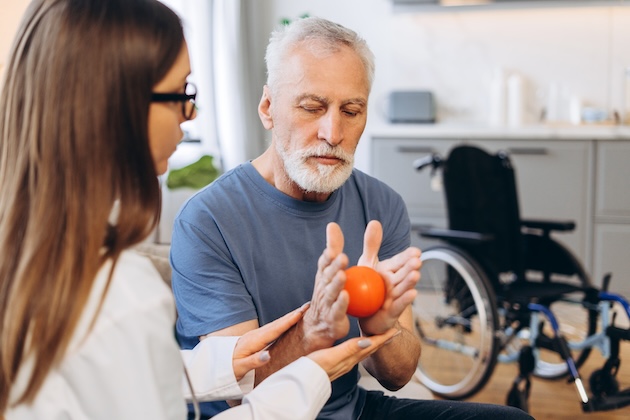
When Do You Meet an OT: When a person cannot perform these daily activities due to a stroke, car accident, severe illness, or brain degeneration, an OT steps in. For example, if a stroke patient has a paralyzed right arm, a Physical Therapist (PT) will focus on training muscle strength and joint mobility (like asking them to lift dumbbells). An Occupational Therapist (OT), however, will directly teach them how to get dressed using their left hand, clip their nails one-handed, or use a specialized button hook. The goal of an OT is not to make your muscles bulky, but to ensure that you can manage your daily life independently.
Professional Expertise: Activity Analysis. The signature skill of an OT is breaking down a seemingly simple action (like "brewing a cup of hot coffee") into dozens of cognitive and motor steps. This allows them to precisely assess whether a patient lacks hand grip, body balance, or if the brain forgot the sequence of steps, enabling targeted rehabilitation.
2. The Invisible "Home Renovation Masters" and Assistive Device Inventors: Renovating Your Home Before Discharge?
The Fun Fact: Walking into a hospital's OT department might make you think you've entered IKEA or an interior design studio! OT therapy rooms often feature simulated kitchens and bathrooms, filled with all kinds of "gadgets" (rehabilitation assistive devices), such as chopsticks with thickened handles, magnet-assisted buttonless closures, one-handed cutting boards, and angled cups.
When Do You Meet an OT: When wheelchair users or elderly individuals recovering from fracture surgeries are preparing for discharge, they often find their homes transformed into a "maze filled with obstacles"—door thresholds too high for wheelchairs, slippery bathrooms prone to falls, or kitchen cabinets too high to reach.
At this point, OTs perform an on-site home environment assessment. They transform into interior designers and engineers to measure spaces, draw blueprints, and guide families on where to install grab rails, widen door frames, or modify furniture.
Professional Expertise: Environmental Modification & Assistive Technology. This demonstrates the unique professional ethos of OT: "Treating not just the person, but also the environment." By altering the physical surroundings or inventing assistive devices, they enable patients with physical disabilities to live independently just like anyone else.
3. They Don't Just Treat the Body—They Are Engineers of the "Mind and Brain"
The Fun Fact: Many people don't know that when OT originated over a century ago, it was first used in psychiatric asylums! In modern healthcare, OT is one of the few comprehensive professions that spans both physical rehabilitation and psychiatric/pediatric rehabilitation.
When Do You Meet an OT:
- Adult Psychiatry: When patients suffer from severe depression, schizophrenia, anxiety, or dementia. OTs use knitting, crafts, cooking, or even simulated office scenarios to retrain concentration, social skills, and time management, preventing cognitive decline and helping them reintegrate into society.
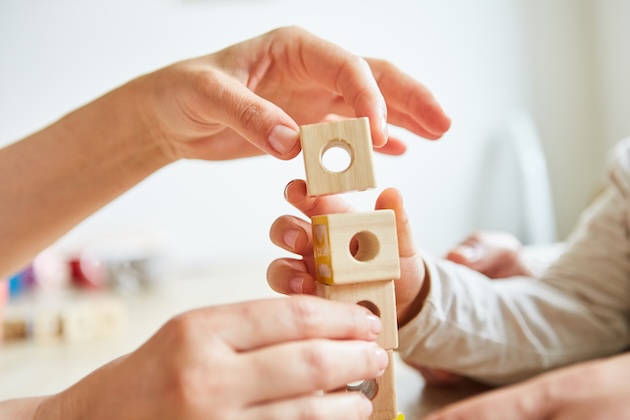
- Pediatrics (SEN Children): Working with children with Special Educational Needs (SEN) such as autism, ADHD, or developmental delays. OTs use "Sensory Integration Training" (like using swings, ball pits, and climbing structures) to regulate hypersensitive or hyposensitive neurological systems, improving focus and behavioral issues.
Professional Expertise: Psychiatric OT & Sensory Integration. Taking a holistic approach, OTs firmly believe that "meaningful activity and participation" are the best remedies for healing the mind and nervous system.
4. The Strongest Backbone for Orthopedic Surgeons: Handcrafting "Medical-Grade Exoskeletons" for Patients
The Fun Fact: In a corner of the OT department, you'll often smell warm plastic and see OTs holding splint pans and heat guns, like sculptors molding soft plastic sheets onto a patient's limbs. This isn't arts and crafts; they are fabricating medical-grade splints.
When Do You Meet an OT: When a patient suffers from severed fingers in a severe industrial accident, severe joint fractures, tendon tears, or major burns. To prevent scar contractures that stop fingers from straightening, avoid joint stiffness, or protect newly sutured nerves, OTs use low-temperature thermoplastic materials to custom-mold a rigid splint within minutes based on the patient's unique hand shape. As the patient recovers, the OT micro-adjusts the splint's angle weekly.
Professional Expertise: Hand Rehabilitation & Splinting. This requires hardcore knowledge of anatomy, upper limb neurology, and biomechanics. A discrepancy of just 1 mm in angle or pressure could permanently impair the patient's hand function.
Occupational therapy is a highly selective, independent profession precisely because it combines clinical medicine, psychology, engineering design, and social sciences. With Hong Kong facing an aging population alongside a surging societal emphasis on Special Educational Needs (SEN) children's services and community rehabilitation, occupational therapists remain in chronic undersupply.
Source: Shutterstock
Study Abroad Hotspot: Curtin University's Hardcore "1,000-Hour Internship" Program in Australia
For students looking to bypass fierce local competition and head overseas, Curtin University in Australia is a premier choice for top-tier Hong Kong students. Its Bachelor of Science (Occupational Therapy) (Honours) is a 4-year honors degree with a stellar local reputation (its rehabilitation graduates rank among the top for employment rates and salaries among public universities in Western Australia). Its curriculum and fieldwork placements are exceptionally rigorous:
- Accumulating up to 1,000 Hours of Fieldwork Placements: The most industry-acclaimed highlight of the program is that students must complete approximately 1,000 hours of clinical and industry placements over 4 years! Students step directly into major Western Australian hospitals, mental health rehabilitation centers, and communities for hands-on experience (with options to apply for international placements), ensuring they are fully capable of practicing independently upon graduation.
- Comprehensive Curriculum Spanning Five Core Domains: Beyond hardcore anatomy and physiology, the course trains students to identify and assess the physical, psychosocial, cognitive, behavioral, and environmental factors that influence a patient's daily participation, offering a holistic education in patient-centered, interdisciplinary care.
- State-of-the-Art Simulation Facilities: Curtin features dedicated laboratories and simulation learning spaces. Before heading out to formal placements, students repeatedly practice core OT skills—such as splint fabrication and home environment modification assessments—in highly realistic, replicated hospital wards, kitchens, and home environments.
- International and Hong Kong Professional Recognition: This degree is fully accredited by the World Federation of Occupational Therapists (WFOT). Furthermore, during their third and fourth years, high-achieving students can complete an independent Honours research project under faculty guidance, opening doors to publish academic papers.
Reclaiming Dignity in Daily Life: Secure Your UK & Australian Occupational Therapy Place with Synchro Overseas Education
For students who enjoy connecting with people, possess a blend of creativity and empathy, and desire a clear and stable career progression framework, this "hidden gem" of a medical specialty—which tangibly transforms the trajectory of human lives—is undoubtedly an exceptional choice for local or overseas studies!
The professional team at Synchro Overseas Education is ready to tailor a bespoke UK and Australian Occupational Therapy (OT) study plan just for you. Whether it is entry planning for top-tier institutions like Curtin University with World Federation of Occupational Therapists (WFOT) accredited programmes, academic profiling for essential anatomy and psychology prerequisites, strategic guidance on securing the 1,000-hour clinical and psychiatric placement, or navigating local registration pathways upon returning to Hong Kong, we offer the most forward-thinking professional advice and global perspectives. We are here to help your children confidently achieve their dreams of becoming internationally registered occupational therapists. For more information or to book a consultation, please contact Synchro Overseas Education by calling 2111 1480 or via WhatsApp 5117 4380.