Today, we turn our attention to another elite medical discipline that sees intense competition under JUPAS and demands exceptionally high admission scores—Physiotherapy.
In the minds of many parents and students, a physiotherapist’s job is often stereotyped as simply giving massages, stretching limbs, or applying ice packs and sports tape when an athlete gets injured. If that is what you think, you are vastly underestimating this profession!
Physiotherapy is a profound science that integrates biomechanics, neuroscience, and clinical medicine. Today, we share 6 fun facts that even regular physiotherapy patients might not know, revealing how physiotherapists use their hands and science to "reverse the odds" and restore lives!
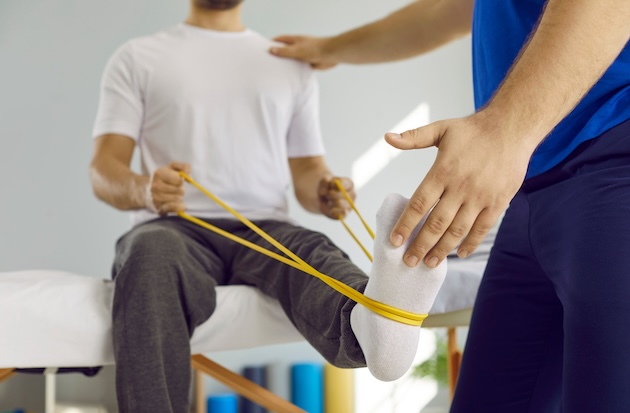
Source: Shutterstock
1. Cardiopulmonary Physiotherapy
【Physiotherapists Must Know How to "Clear Phlegm"? They Are the Lifesaving Heroes Helping Patients Breathe in the ICU!】
The Fun Trivia: Many assume that physiotherapists only deal with limbs and bones, but did you know they are also responsible for a patient's lungs? In public hospital Intensive Care Units (ICUs) or cardiac wards, many critically ill patients who have just undergone major surgery or are intubated cannot cough on their own. Consequently, thick phlegm accumulates in their lungs, which can trigger asphyxiation or fatal pneumonia at any moment. In these critical times, physiotherapists perform Chest Physical Therapy (Chest PT). Using specialized techniques—such as vibrating or clapping the patient's chest—combined with postural drainage, they precisely "clear" the accumulated phlegm from the bottom of the lungs, directly saving lives!
Corresponding Fields of Study:
- Cardiopulmonary Rehabilitation: Studying the pathology of the respiratory and circulatory systems, and learning how to improve lung function through physical modalities.
- Intensive Care Physiotherapy: Mastering rehabilitation techniques to safely treat patients on life-support equipment within an ICU environment.
2. Neurological Physiotherapy
【Paralyzed and Unable to Walk After a Stroke? Therapists Are Actually "Rewiring" the Brain!】
The Fun Trivia: When you see a stroke or brain injury patient taking halting steps to relearn how to walk, do you think the therapist is simply training their leg muscles? No, they are actually training the patient's brain! Thanks to the scientific discovery of neuroplasticity, even when certain nerves die off due to a stroke, high-intensity, repetitive, and precisely targeted movement training designed by a physiotherapist can allow the brain to miraculously "bypass" the damaged areas. This establishes new neural pathways, enabling the paralyzed limbs to receive movement commands once again.
Corresponding Fields of Study:
- Neurobiology & Rehabilitation: Delving deep into the control mechanisms of the brain, spinal cord, and peripheral nervous system.
- Motor Learning & Control: Studying the scientific principles of how the human body acquires, controls, and optimizes movement skills.
3. Musculoskeletal & Ergonomics
【Treating the Foot for a Headache? "Treating Only the Site of Pain" Is a Major Taboo for Physiotherapists!】
The Fun Trivia: Many office workers seeking treatment for numb hands or back pain often complain: "Therapist, my hand is the part that feels numb. Why do you keep pressing my neck?" This highlights one of the most fascinating phenomena in physiotherapy—Referred Pain. Within the human anatomy, a skeletal misalignment or muscle strain at the source (such as a compressed nerve in the cervical spine) often sends pain signals radiating down nerve pathways into the hand. Therapists act like medical detectives, utilizing various palpation and stretching tests to hunt down the true "culprit" rather than blindly treating only where it hurts.
Corresponding Fields of Study:
- Kinesiology & Biomechanics: The precise science of calculating forces on human joints, muscle leverage principles, and skeletal alignment.
- Advanced Musculoskeletal PT: Mastering core clinical hands-on skills such as manual therapy and joint mobilization.
4. Pediatric & Geriatric PT
【From Premature Babies to Centenarians: The Scope of Physiotherapy Is Far Broader Than You Imagine!】
The Fun Trivia: The demographic served by physiotherapists spans the entire human lifecycle. For premature infants or those with developmental delays, pediatric physiotherapists use toys to guide them through rolling over and crawling, ensuring they hit their growth milestones. On the other end of the spectrum, for elderly patients suffering from dementia or Parkinson's disease, geriatric physiotherapists design fall-prevention exercises. They teach them how to safely get in and out of bed or use the restroom despite age-related muscle loss, safeguarding their independence and dignity.
Corresponding Fields of Study:
- Human Development: Investigating the physiological and motor skill changes in humans from infancy through old age.
- Pediatrics & Geriatrics: Devising targeted treatment plans for conditions unique to different age cohorts, such as pediatric neurological conditions or degenerative joint conditions in older adults.
5. Sports Physiotherapy
【An Elite Athlete's "Invisible Body Armor": It’s Not Just About Healing Injuries, It’s About Decoding Their Return-to-Play Metrics!】
The Fun Trivia: During the Olympics or professional sports matches, the very first person rushing onto the field when a player collapses in injury is usually a sports physiotherapist. However, their job extends far beyond acute emergency care; it centers heavily on scientific Return to Play (RTP) testing. For instance, if a soccer player suffers an ACL tear, the therapist must use specialized equipment to ensure the muscle strength ratio between both legs is above 90%, agility test parameters are met, and even assess psychological fear indexes before clearing the player to return to the pitch.
Corresponding Fields of Study:
- Sports Medicine: Researching sports injury prevention, acute management, and sport-specific functional training.
- Advanced Biomechanical Analysis: Utilizing technology to analyze an athlete's running gait or jump-landing mechanics to optimize athletic performance.
6. Therapeutic Modalities
【The "Avengers" of the Physiotherapy Clinic: Shockwaves, Ultrasounds, and Electrotherapy Join the Fight!】
The Fun Trivia: Step into any physiotherapy clinic, and you will see a vast array of high-tech devices. Sometimes a therapist will apply sticky pads to your skin and turn on an electric current (TENS), creating a tingling sensation. Other times, they will apply gel and glide an ultrasound probe over an injury, or even whip out a radial Shockwave Therapy machine that makes a loud, rapid clacking noise like a miniature machine gun. These devices are not meant for casual relaxation; rather, they use specific physical agents (micro-currents, high-frequency sound waves, acoustic streaming) to stimulate local microcirculation at a cellular level. This prompts chronically inflamed tissues to "re-inflame" correctly and jumpstart accelerated self-healing.
Corresponding Fields of Study:
- Electro-physical Agents: Learning how to safely and precisely deploy physical energies—such as light, electricity, sound, magnetism, and heat—to achieve anti-inflammatory, pain-relief, and rehabilitative outcomes.
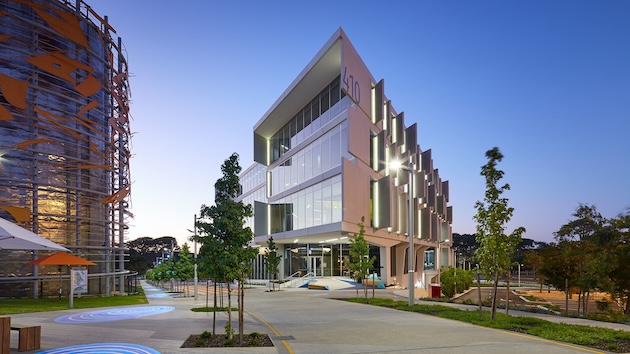
Source: Curtin University
Core Admission Alert for Curtin University, Australia: A Highly Popular Program—Secure Your Spot Early!
Physiotherapy is widely recognized as a "semi-divine subject" in Hong Kong. Graduates command incredibly high starting salaries (with the starting pay for a Grade II Physiotherapist in public hospitals exceeding HKD 30,000), and the private market—including private clinics and elderly care facilities—is starved for talent, making the career prospects virtually limitless.
The Reality in Hong Kong: An Exceptionally Narrow Path
Although local institutions like The Hong Kong Polytechnic University (PolyU), Hong Kong Metropolitan University (HKMU), and Tung Wah College (TWC) offer accredited physiotherapy degrees, the JUPAS admission scores remain exceptionally high, deterring many deeply passionate students.
Top Premier Choice Abroad: Curtin University, Australia
In the landscape of overseas education, the physiotherapy program at Curtin University in Australia enjoys an outstanding global reputation. Its Bachelor of Science (Physiotherapy) (Honours) program is renowned for its rigorous clinical placements and exceptionally skilled graduates. Crucially, the qualification aligns seamlessly with Hong Kong's professional registration requirements, allowing graduates to return and practice with zero friction.
Essential Guide for International Students: What Is a Quota Program?
Parents and students must take careful note: the Physiotherapy program at Curtin University is a strict Quota Program.
- Highly Restricted Capacity: To guarantee that every student receives a high-quality clinical placement in public hospitals, the university allocates an extremely limited number of seats for international students each year.
- Beyond Simple "First-Come, First-Served": These programs typically have their own early application deadlines and undergo exceptionally stringent vetting. Once the international student quota for the year is filled, the university will immediately close admissions or place further applications onto a waitlist—regardless of how high a student's academic scores are.
- Strategic Recommendation: Given that the competition is just as fierce as it is in Hong Kong, students wishing to apply to Curtin University's physiotherapy program must not wait until public exam results are released or the final deadline approaches to submit their applications. It is highly recommended to submit an application early during your final year of high school (such as when your DSE predicted grades are released) to secure an evaluation slot. Planning ahead is the only way to ensure a winning chance in this global battle for an elite medical seat!

Source: Shutterstock
Ignite Your Medical Specialty Dream: Secure Your UK & Australian Physiotherapy Place with Synchro Overseas Education
Due to the strictly limited quotas for international students in Curtin University's physiotherapy department, the university will close admissions immediately once the annual cap is reached. Therefore, the competition is no less intense than in Hong Kong. Prospective students are strongly advised not to wait until public exam results are released; instead, submit your applications early during your final year of high school to secure an assessment slot. Only by planning ahead can you secure a definitive advantage in this global race for a top-tier medical specialty!
The professional team at Synchro Overseas Education is ready to tailor a bespoke UK and Australian physiotherapy study plan just for you. Whether it is strategic early-application planning for high-demand Quota Programmes at prestigious institutions like Curtin University, academic profiling for essential biomechanics and science prerequisites, interview coaching, or university selection strategies for physiotherapy pathway programmes, we offer the most forward-thinking professional advice and global perspectives. We are here to help your children confidently achieve their dreams of becoming internationally registered physiotherapists. For more information or to book a consultation, please contact Synchro Overseas Education by calling 2111 1480 or via WhatsApp 5117 4380.